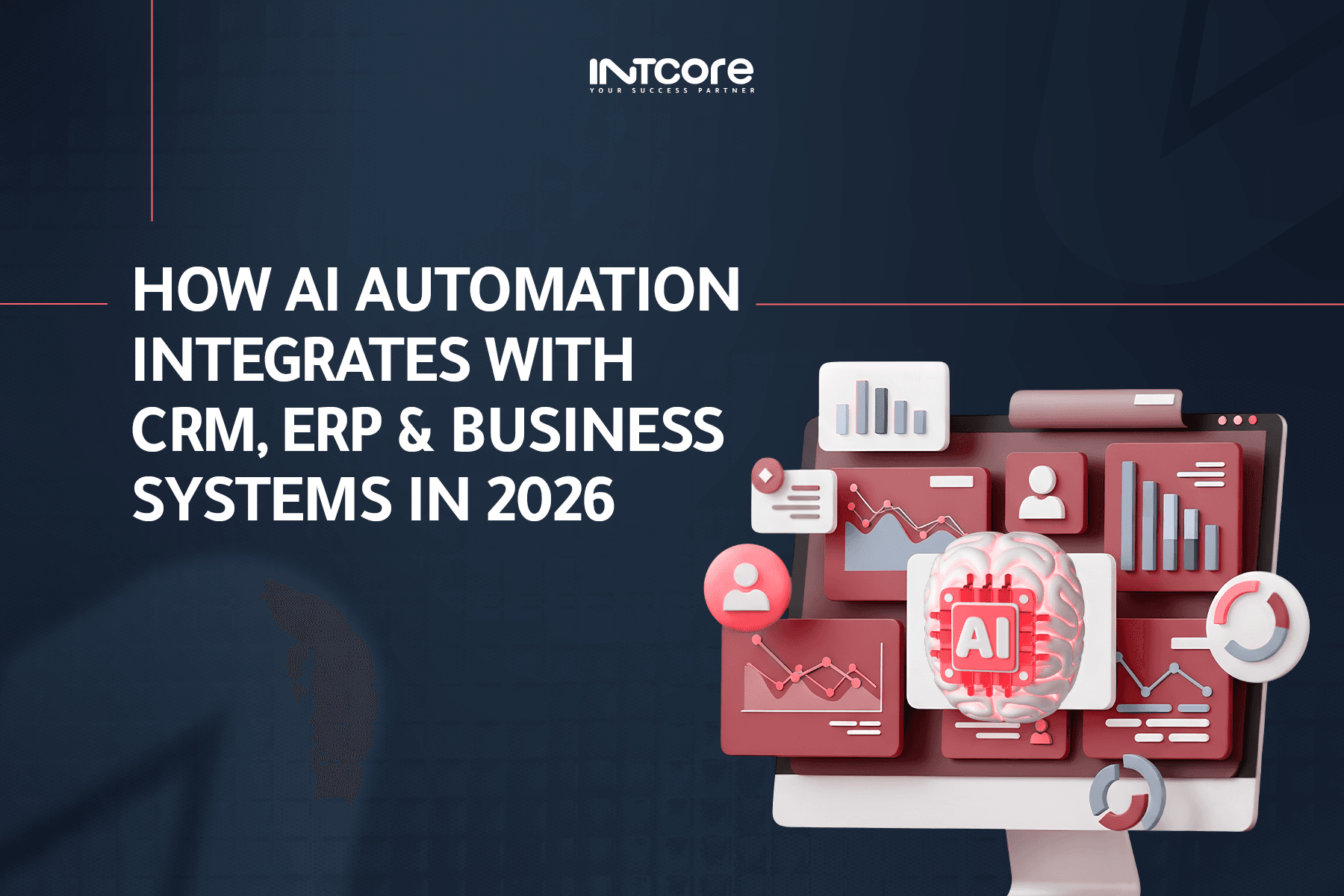
In 2026, AI automation is no longer a standalone tool, it has become deeply involved within core business systems like CRM, ERP, and other enterprise platforms. This integration is transforming how companies operate, making processes faster, smarter, and more data-driven.
Businesses that leverage AI automation within their systems gain a significant competitive advantage through improved efficiency, enhanced customer experience, and better decision-making.
What Is AI Automation in Business Systems?
AI automation refers to the use of artificial intelligence technologies, such as machine learning, natural language processing, and predictive analytics to automate repetitive tasks and optimize workflows.
When integrated with systems like CRM (Customer Relationship Management) and ERP (Enterprise Resource Planning), AI goes beyond automation to enable intelligent decision-making and real-time insights.
AI Automation in CRM Systems
A CRM system like Salesforce or HubSpot is essential for managing customer relationships, sales pipelines, and marketing activities. AI automation enhances CRM systems by:
Lead Scoring and Qualification:
AI analyzes customer data and behavior to identify high-quality leads, helping sales teams focus on the most promising opportunities.
Predictive Sales Insights:
AI predicts customer behavior, such as likelihood to purchase or churn, allowing proactive engagement.
Personalized Customer Experiences:
AI customizes email campaigns, offers, and communication based on user preferences and past interactions.
Chatbots and Virtual Assistants:
AI-powered chatbots handle customer inquiries 24/7, improving response time and customer satisfaction.
By integrating AI, CRM systems evolve from simple databases into intelligent platforms that actively support sales and marketing strategies.
AI Automation in ERP Systems
ERP systems manage core business operations such as finance, supply chain, procurement, and human resources. AI automation enhances ERP systems by:
Demand Forecasting:
AI analyzes historical data and market trends to predict inventory needs, reducing overstock and stockouts.
Financial Automation:
AI automates invoice processing, expense tracking, and fraud detection.
Supply Chain Optimization:
AI identifies inefficiencies and suggests the best routes, suppliers, or inventory strategies.
Anomaly Detection:
AI monitors transactions and flags unusual activities that could indicate errors or fraud.
With AI integration, ERP systems become proactive tools that help businesses anticipate challenges rather than just react to them.
How AI Connects CRM and ERP Systems
One of the most powerful applications of AI automation is its ability to connect CRM and ERP systems into a unified ecosystem.
For example:
A sales opportunity captured in the CRM can automatically trigger inventory checks in the ERP. AI can analyze customer purchasing patterns from CRM data and adjust production planning in the ERP accordingly.
Financial data from the ERP can be used by AI models to predict customer lifetime value within the CRM. This integration ensures that all departments from sales and marketing to finance, and operations are working with the same real-time data, improving collaboration and accuracy.
Benefits of AI Automation Integration
Integrating AI automation with CRM and ERP systems provides several key benefits:
Increased Efficiency:
Automating repetitive tasks reduces manual work and operational costs.
Better Decision-Making:
AI provides actionable insights based on real-time data.
Enhanced Customer Experience:
Personalized and timely interactions improve customer satisfaction and retention.
Scalability:
AI systems can handle growing data and operations without significant increases in cost.
Reduced Errors:
Automation minimizes human errors in data entry and processing.
The Future of AI Automation in Business Systems
Looking ahead, AI automation will continue to evolve toward fully autonomous business systems. With advancements in generative AI, predictive analytics, and real-time data processing, CRM and ERP platforms will become self-optimizing ecosystems.
Companies that invest in AI integration today will be better positioned to scale, innovate, and compete in an increasingly data-driven world.
Want to get started with AI automation? Contact us now!