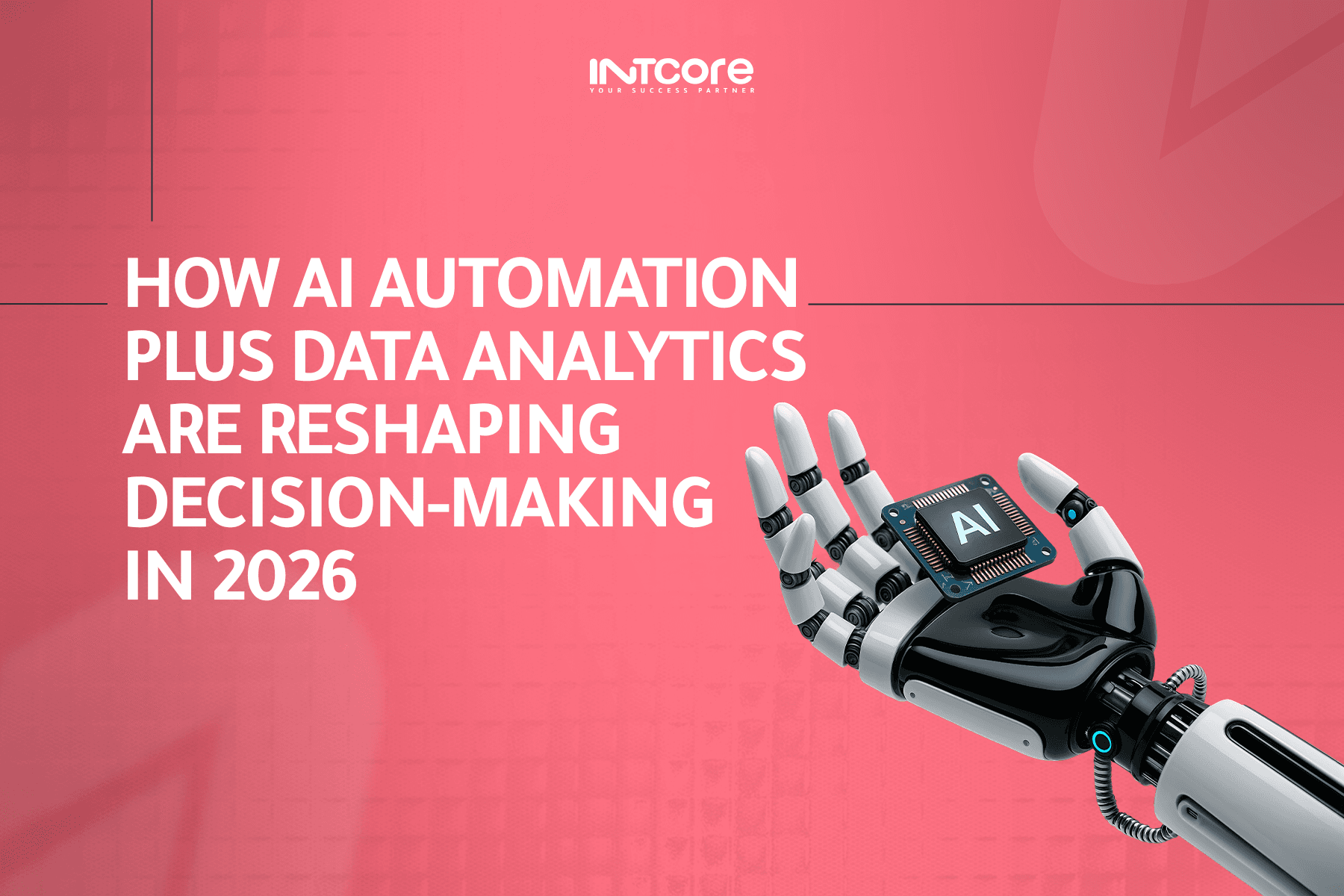
In 2026, businesses are no longer making decisions based on guesswork or delayed reports. The combination of AI automation and data analytics has completely transformed how companies operate, compete, and grow.
From real-time insights to predictive decision-making, organizations now rely on intelligent systems to guide their strategies with speed and precision.
The Shift from Reactive to Predictive Decision-Making
Traditionally, businesses analyzed historical data to understand what had already happened. While useful, this approach often led to delayed responses and missed opportunities. Today, AI-powered data analytics enables predictive decision-making, allowing companies to anticipate trends, customer behavior, and market changes before they happen.
AI automation processes massive amounts of data in seconds, identifying patterns that humans simply cannot detect. This means decision-makers can move from reacting to problems to proactively solving them.
Real-Time Insights at Scale
One of the biggest advantages of combining AI automation with data analytics is real-time data processing. In 2026, businesses no longer wait for weekly or monthly reports. Instead, dashboards update instantly, providing live insights into performance, customer interactions, and operational efficiency.
For example:
- Marketing teams can instantly adjust campaigns based on user engagement.
- Sales teams can prioritize leads based on AI-driven scoring.
- Operations teams can detect inefficiencies before they impact performance.
This level of agility gives businesses a significant competitive advantage.
Enhanced Accuracy and Reduced Human Error
Human decision-making is often influenced by bias, incomplete information, or time constraints. AI automation minimizes these risks by relying on data-driven logic. Advanced algorithms analyze multiple data sources simultaneously, ensuring decisions are based on comprehensive and accurate insights.
In industries like finance, healthcare, and real estate, this accuracy is critical. Businesses can:
- Reduce financial risks
- Improve forecasting accuracy
- Make smarter investment decisions
Personalization at a New Level
In 2026, personalization is no longer optional; it’s expected. AI automation combined with data analytics allows businesses to deeply understand customer behavior, preferences, and intent.
Instead of broad segmentation, companies now deliver hyper-personalized experiences.
This includes:
- Customized product recommendations
- Personalized marketing messages
- Dynamic website experiences
By leveraging real-time data, businesses can tailor every interaction, leading to higher engagement and conversion rates.
Faster and Smarter Business Operations
AI automation doesn’t just support decision-making; it accelerates it. Routine tasks such as data collection, reporting, and analysis are fully automated, freeing up teams to focus on strategy and innovation.
This results in:
- Faster decision cycles
- Increased operational efficiency
- Reduced costs
For example, AI can automatically generate performance reports, highlight key insights, and even suggest recommended actions, eliminating hours of manual work.
Data-Driven Culture Across Organizations
Another major shift in 2026 is the rise of a data-driven culture. Decision-making is no longer limited to executives or analysts. With user-friendly dashboards and AI-powered tools, teams across all departments can access and understand data easily.
This democratization of data leads to:
- Better collaboration across teams
- More informed decisions at every level
- Increased accountability and transparency
Businesses that embrace this culture are more agile, innovative, and competitive.
Challenges to Consider
While the benefits are significant, companies must also address key challenges:
- Data quality: Poor data leads to poor decisions
- Integration: Combining multiple data sources can be complex
- Skill gaps: Teams need to understand how to interpret AI-driven insights
To fully leverage AI automation and data analytics, businesses must invest in the right tools, training, and infrastructure.
The Future of Decision-Making
Looking ahead, decision-making will become even more autonomous. AI systems will not only provide insights but also execute decisions within defined parameters.
This includes automated budget allocation, dynamic pricing, and real-time campaign optimization.
However, human oversight will remain essential. The most successful organizations in 2026 are those that combine AI intelligence with human judgment.
Conclusion
AI automation and data analytics are no longer just supporting tools; they are the foundation of modern decision-making. Businesses that embrace these technologies can move faster, operate smarter, and deliver better results.
In a world where speed and accuracy define success, companies that rely on data-driven, AI-powered decisions will lead the market, while those that don’t risk falling behind.
Want to get started with AI automation? Contact us now!