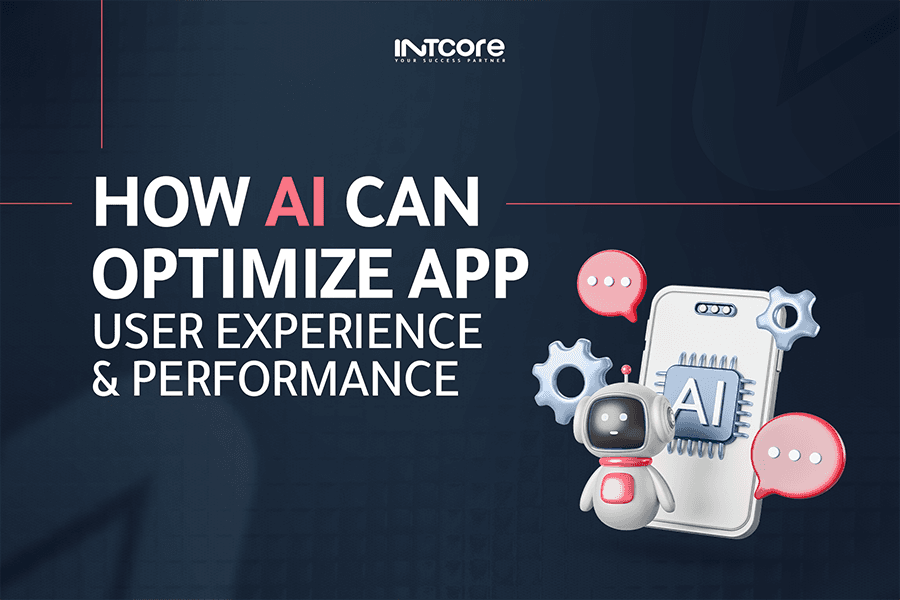
Mobile apps are no longer judged only by their features. In 2026, users expect apps to be fast, intuitive, personalized, and always available. If an app lags, crashes, or feels “generic,” users uninstall it within seconds.
This is where Artificial Intelligence (AI) becomes a game-changer. AI is not just improving app, it is actively reshaping how they perform and how users experience them.
In this blog, we’ll break down how AI helps optimize app performance and user experience (UX), and why businesses should adopt it now.
What Does AI Optimization in Apps Mean?
AI optimization in mobile and web apps refers to using machine learning algorithms and intelligent systems to:
- Improve speed and performance
- Predict user behavior
- Personalize user journeys
- Detect and fix issues automatically
- Enhance engagement and retention
Instead of relying on manual updates and guesswork, AI continuously learns from user data and improves the app in real time.
1. AI Improves App Performance in Real Time
One of the biggest advantages of AI is continuous performance monitoring and optimization.
How it works:
AI systems analyze:
- App loading speed
- Server response time
- Crash reports
- Memory usage
- Device performance differences
Key benefits:
- Faster load times through predictive caching
- Reduced crashes using anomaly detection
- Smarter resource allocation
- Automatic performance tuning based on user behavior
For example, AI can detect when a feature is slowing down the app and adjust backend processes instantly—before users even notice.
2. AI Enhances User Experience Through Personalization
Modern users expect apps to “understand” them. AI makes that possible.
AI-powered personalization includes:
- Customized home screens
- Smart content recommendations
- Behavior-based notifications
- Dynamic UI adjustments
Instead of showing the same experience to everyone, AI builds a unique journey for each user.
Result:
- Higher engagement rates
- Longer session durations
- Increased customer satisfaction
Apps like Netflix, Amazon, and Spotify already rely heavily on AI-driven personalization—and this trend is now standard across industries.
3. Predictive Analytics for Better UX Decisions
AI doesn’t just react, it predicts.
By analyzing user behavior patterns, AI can forecast:
- Which features users will use next
- Where users are likely to drop off
- What causes frustration in the journey
This helps businesses:
- Improve UI/UX design decisions
- Optimize user flows
- Reduce churn rates
- Increase conversion rates
Instead of redesigning based on assumptions, companies can now make data-backed UX improvements.
4. AI-Powered Chatbots and Smart Support Systems
Customer support is a major part of user experience. AI is transforming it completely.
AI chatbots can:
- Provide instant responses 24/7
- Understand user intent using NLP (Natural Language Processing)
- Solve common issues without human intervention
- Escalate complex issues intelligently
Impact on UX:
- Reduced waiting time
- Faster problem resolution
- Improved user trust and satisfaction
This creates a smoother and more seamless app experience overall.
5. Bug Detection and Automated Fixes
Traditionally, bugs are found after users report them. AI changes that.
AI can:
- Detect unusual app behavior patterns
- Identify bugs before they affect users
- Suggest or apply automatic fixes
- Predict system failures
This leads to:
- Fewer app crashes
- More stable performance
- Better overall reliability
6. Smarter Push Notifications and User Engagement
Poorly timed notifications are one of the main reasons users uninstall apps.
AI solves this by analyzing:
- User activity patterns
- Preferred engagement times
- Content relevance
Result:
- Notifications sent at the right time
- Higher click-through rates
- Lower uninstall rates
Instead of spamming users, AI ensures every message adds value.
7. AI Improves UI/UX Design Decisions
AI tools can now analyze design performance and suggest improvements such as:
- Button placement optimization
- Color contrast improvements
- Navigation flow enhancements
- Heatmap analysis of user interaction
This helps designers create interfaces that are not only beautiful but also highly functional and user-friendly.
Why Businesses Must Adopt AI in App Development
Apps without AI are becoming outdated. In competitive markets, especially in regions like the UAE and GCC, users expect:
- Speed
- Personalization
- Seamless experience
- Zero friction interactions
AI gives businesses a clear advantage by improving both technical performance and user satisfaction simultaneously.
Final Thoughts
AI is no longer a “future technology” for apps, it is a current necessity.
By integrating AI into app development and optimization, businesses can:
- Improve app speed and stability
- Deliver personalized user experiences
- Increase retention and engagement
- Reduce operational costs
- Stay ahead of competitors
In 2026, the apps that succeed will not be the ones with the most features, but the ones that are smart, adaptive, and AI-driven.
Want to get started with AI? Contact us now!